
Why Bother With Genres?
How Genres Help or Hinder Our Understanding of Games

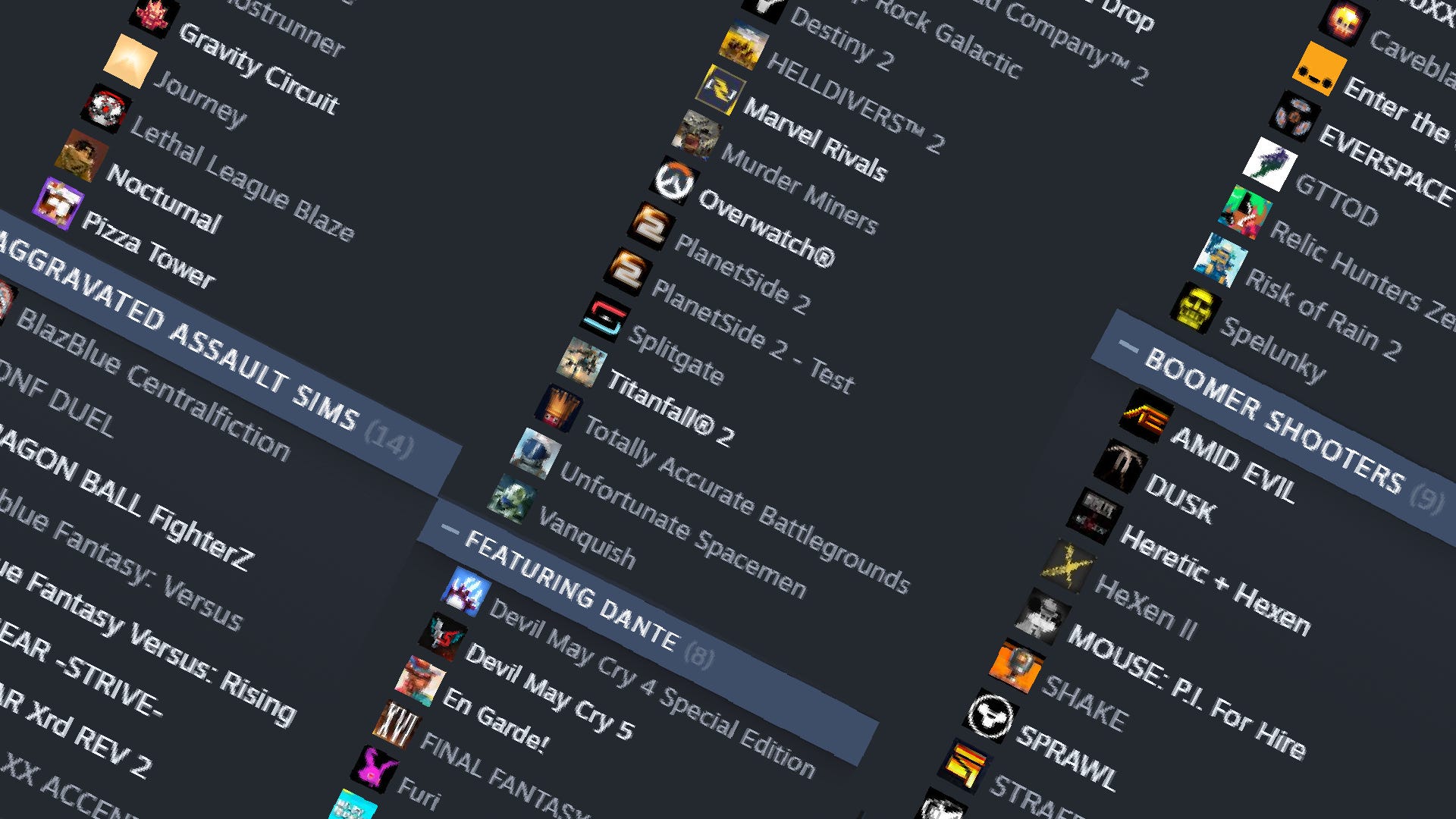
When MOUSE: P.I. For Hire released back on April 16th, I was excited for what had looked like a boomer shooter with some serious production value. After getting my hands on it, I wasn’t sure if I would still call it that. Sure, you move fast and gun down crowds of enemies, but why do I need to reload my guns? Why do my weapons have recoil and spread? Why are my movement and melees tied to a stamina bar? Why are levels so linear? It got me thinking about just how specific and niche the boomer shooter subgenre’s defining characteristics are. Most have no problem calling MOUSE: P.I. a boomer shooter, but the aforementioned qualities disqualify it in my eyes. In the same way, aspects like skill/weapon upgrades and the emphasis on aerial movement cause other people to disqualify games I would include, like Doom Eternal. If these games aren’t boomer shooters, then what exactly are they? Are they arena shooters? Is that even a real genre, or did we just need something to call Halo that doesn’t make it sound like a boomer shooter? Is any genre a real genre?
The more I think about it, the more I wonder just how we define genres in video games and, more importantly, why we try so hard to fit it all in. I suppose it’s human nature to seek patterns, but at a certain point, the pattern becomes so complicated that it isn’t broadly applicable or helpful. Sure, games aren’t the only medium where genre definitions are vague (where’s the line between a thriller and a horror movie, after all?), but they are the medium where genres seem the least intuitive. What’s a novice supposed to think when somebody describes something as a “soulslike” or a “metroidvania”? How many different things will an experienced player think of if you call something an action game? Do genre pigeonholes get in the way of our ability to take something on its own terms? To understand what genres contribute to our critical understanding, I’m going to examine the history of video game genres and how studios and fans have come to use them today.
Sell Me On It
In the simplest possible terms, genres can be understood as shorthand categories for what one might expect in a given work. As such, they’re an important way for companies to quickly and intuitively market something to their audience. When video games emerged as a marketable medium in the late ‘70s and early ‘80s, the companies selling them were the first to make much of a documented effort with genres. What they considered important to communicate in this way and how they did it says a lot about how our understanding of video games began.
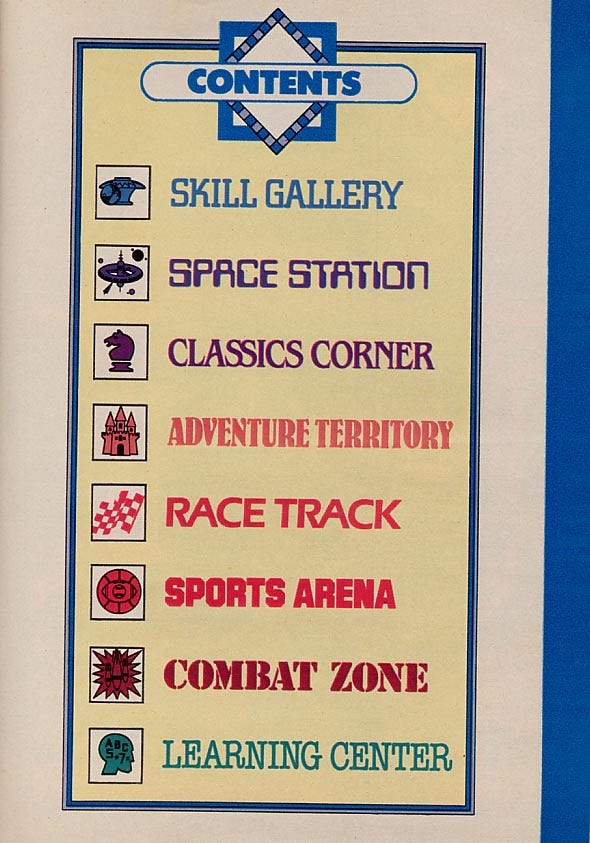
Above is a scan from a 1981 catalogue of Atari 2600 games sorted into eight genres. Aside from the silly, theme park area-esque names which reflect the common understanding from the time of video games as simple toys, what first stands out to me is the lack of consistency in which aspects of the game define the genre. “Space” is an aesthetic aspect of the game, not a mechanical one. The games listed under that category are all pretty different, from Space Invaders to Missile Command to Defender. “Adventure Territory” is introduced with a large fantasy illustration, but the three games included are again completely different. Of course there’s Adventure, but there’s also Haunted House and… Superman? “Adventure” is one of the few terms here which remains a genre today, but there’s basically no mechanical connection between these games. “Skill Gallery” and “Combat Zone” are in a similar boat, the former containing score attack games that didn’t fit anywhere else and the latter containing a variety of games that involve combat. Both aspects which define these genres are extremely common to most of the other ones.
Though it’s hardly a surprise that Atari didn’t have an expert understanding of video games, this is indicative of a broader issue in early gaming genres; the blending of aesthetic and experiential markers. These are two different categories of genre that function largely independently of one another. This is true of other mediums as well, where aesthetic genres like “fantasy” or “sci-fi” need not conflict with experiential ones like “action” or “drama,” but one finds that the experiential side of things carries much more weight in the world of video games. “Genre and game studies: Toward a critical approach to video game genres,” a 2006 paper by Dr. Thomas Apperley, attributes academic difficulties with video game classification of the time to the fact that they “rely overmuch on games[sic] representational characteristics.” Where a film viewer in search of fantasy may not be as picky about the plot structure, the crucial interactive aspect of games vastly increases the importance of its experiential characteristics. The differences between platformers, action games, rpgs, and more can amount to requiring entirely different physical skillsets and a massive difference in playtime from two hours to 200.
Evidenced by the fact that scholars were still mulling it over in 2006, it took a while for this understanding to arrive in the mainstream. Nintendo’s early genres on the NES consisted of adventure, action, light gun, sports, arcade, programmable, robot, and educational. Qualities of the gameplay aren’t identified with much precision and they’re given the same importance as things like required peripherals or where else you might recognize the game from. Tom Hirschfeld’s 1981 book, How to Master the Video Games, categorizes everything into the alternately hyperspecific and vague genres of “Space Invaders-type,” “Asteroids-type,” “maze,” “reflex,” and - get this - “miscellaneous.” To his credit, games really weren’t much more complicated than that back then, and he consistently defines his genres by gameplay and nothing else. Nintendo would come to adapt to that later on, replacing unhelpful or deprecated genres like arcade and light gun with RPG, simulation, and puzzle. RPG is a curiously mature term compared to many of those other genres Nintendo was using, which brings us to our next section…
Tell Me About It
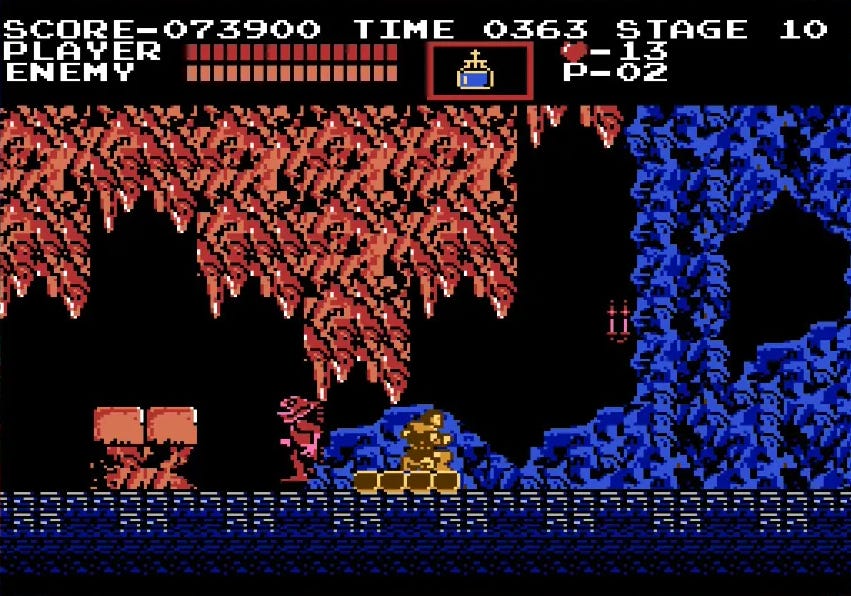
Genres aren’t just how marketers talk to audiences; they’re also how audiences talk to each other. If you’re trying to tell a friend of yours about a game that you’ve played, it’s a lot quicker to say it’s a “platformer” than it is to say it’s “like Super Mario Bros., except if you were slower and didn’t jump as high and there were no mushrooms and you were in Dracula’s Castle and so forth.” Of course, that’s the kind of train of thought that leads to many great games, but it seems to shortchange the genuine inspiration that makes them great. Experienced players saw the through-lines between formative games and their many successors quite easily, and fans developed that sort of internally-intuitive shorthand that would become our established genre terms today. It only makes sense that the people actually playing the games would do a better job defining them.
Of course, these types of people weren’t exactly art scholars interested in genre studies. The whole reason they came up with the terms in the first place was to simplify discussion amongst each other, which works great in some cases but kind of flops elsewhere. One thing players definitely understood better than companies is the idea that gameplay was the most important factor. When one looks at Super Mario Bros., Castlevania, Ninja Gaiden, and Mega Man, there’s no shortage of differences, but it was easy enough to hone in on the one thing they have in common; jumping across platforms to reach the end of the stage. Subgenres like action platformer and run-and-gun helped capture the nuance, too. Technically, nearly every game has you playing a role, but when certain games have you reading lots of dialogue and investing in the long-term growth of your characters, the moniker of the role-playing game does seem quite suitable. Then again, you have cases like first-person shooters being dubbed Doom clones for the better part of a decade because everyone was still broadly referring to games like Gradius and TwinBee as shooters. Nowadays we have subgenres for both, but it took some time to shake out.
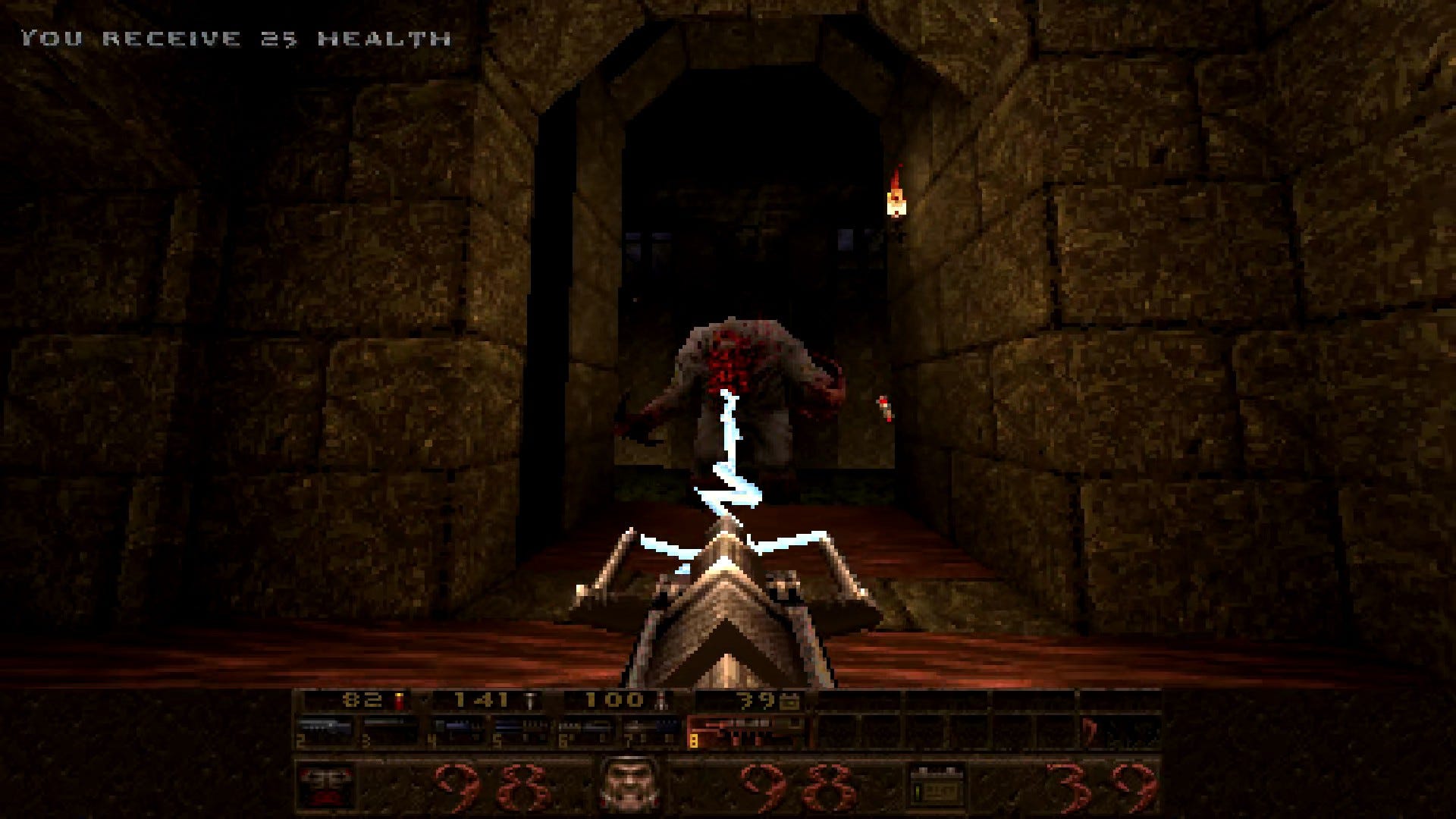
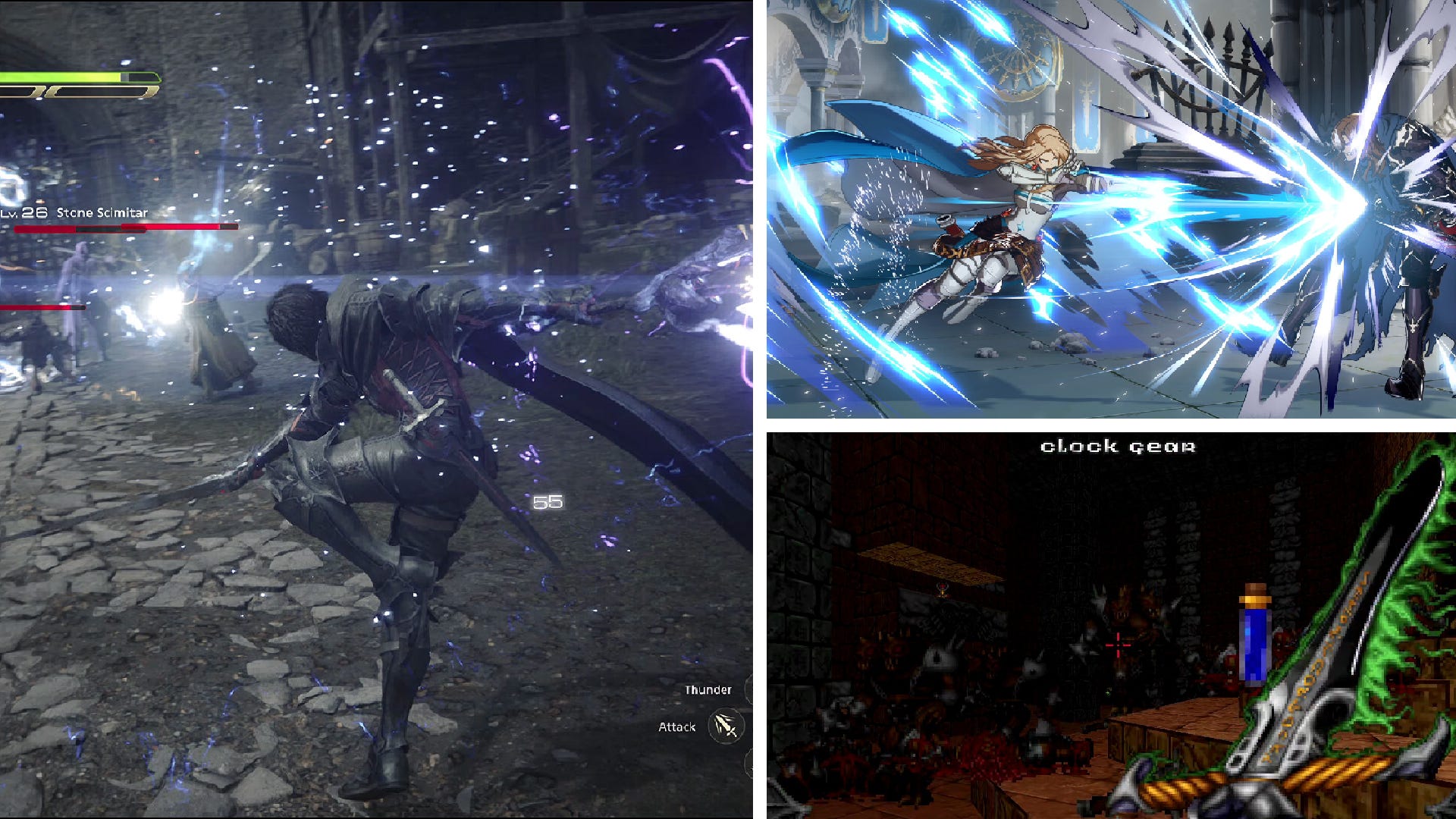
Players’ definitions were worked up on the fly and frequently challenged as the medium evolved, and we still see that in action today. These days, we’re really not that far off of Doom clone with terms like metroidvania and roguelike. Interestingly, these terms emerged many years after the games they call back to; Super Metroid and Castlevania: Symphony of the Night were 1994 and 1997, and Rogue was 1980. These genres also have the common distinction of being hyperspecific, representing a fairly niche convergence of gameplay aspects which can all be found in other genres. It’s notably easier in these cases to make an iconic comparison than it is to come up with a catchy term that actually captures their nuance. Some attempts at that for other genres are pretty weak. Who decided that Devil May Cry-style action games with lots of expressive moves and an emphasis on combos should be called character action? Stylish action is right there! All the same, metroidvanias and roguelikes aren’t really subgenres of anything else, making their complexity even stranger. Here, we begin to arrive at the unavoidable issue with genre classifications.
Who Do Genres Help?
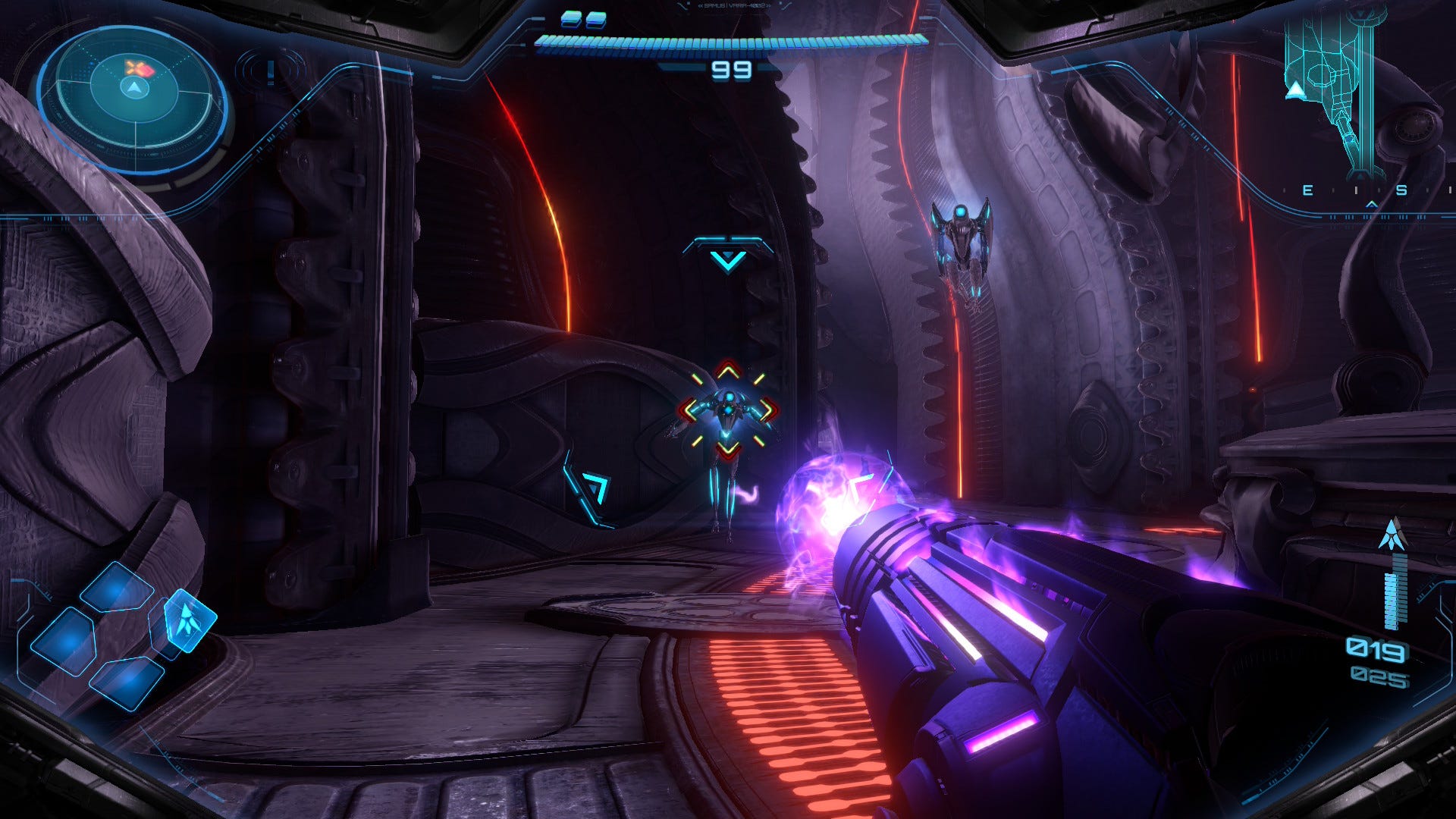
I’ve often wanted to take some time to nail down the complex relationship of genres, genre types, and subgenres, and recently I did try to actually do it. Ultimately, I gave up before long because it became immediately apparent that there were barely any strict definitions without some kind of significant exception. Comparing my own efforts to Wikipedia’s list of video game genres does a good job illustrating this issue. Platformers and rhythm games are listed under action games, but I wouldn’t call action a central tenet of either. Then again, their definition of action is centered around physical execution requirements rather than the aesthetic qualities of action. Metroidvanias are also described as a platformer subgenre, which is mostly true except for all the metroidvanias that are in other genres like Metroid’s own first-person shooter subseries Metroid Prime. Light gun remains one of the shooter subgenres on this list, despite the fact that most light gun games fall under other subgenres like rail shooters already.
There’s no real authority dictating what’s an important enough factor to be its own genre, what subgenres should exist, or which genres should contain those subgenres. It is, like all else in the world of art, subjective, but subjectivity isn’t a very scientific quality for a system of classification. In fact, trying to squish the infinitely subjective into the finite objective is harmfully reductive. Take a niche genre I’ve come to enjoy recently: the immersive simulator. It’s a mostly first-person genre which emphasizes a high level of interactivity with the world and multifaceted problem solving. It also happens to involve shooting stuff fairly often, and it’s much more prolific on PC than other platforms. A difficulty I had with immersive sims when I first started to play them is that I treated them a lot more like shooters, but I appreciated them a lot more once I began thinking outside the box and approaching problems differently. All the same, the immersive sim’s unique foibles are largely obscured by their surface-level resemblance to shooters. People tend to come into immersive sims with some kind of preconceived notion about a genre which they aren’t supposed to be and bounce off, which is one reason the genre has remained niche since it began in the nineties.
This particular trouble with genres lies in the intersection of genres’ purposes. They can be used to track the stylistic evolution of an art form and to boil something down so that audiences can make quick comparisons and find more things they like. Artists are often pushing the boundaries on purpose to make something innovative or at least unique. So many excellent games can be pitched as “It’s like [X] but if it was a little [Y],” and so the genre threads that inspired them are woven together into some whole new thing that doesn’t sort very neatly. Take our old friend, the metroidvania. Super Metroid was originally just a platformer with adventure elements and Castlevania: Symphony of the Night was inspired by The Legend of Zelda: A Link to the Past, but now those games have inspired countless other titles. Fans responded by giving those games a unique, if lazily-construed, genre term that has outgrown its parents.
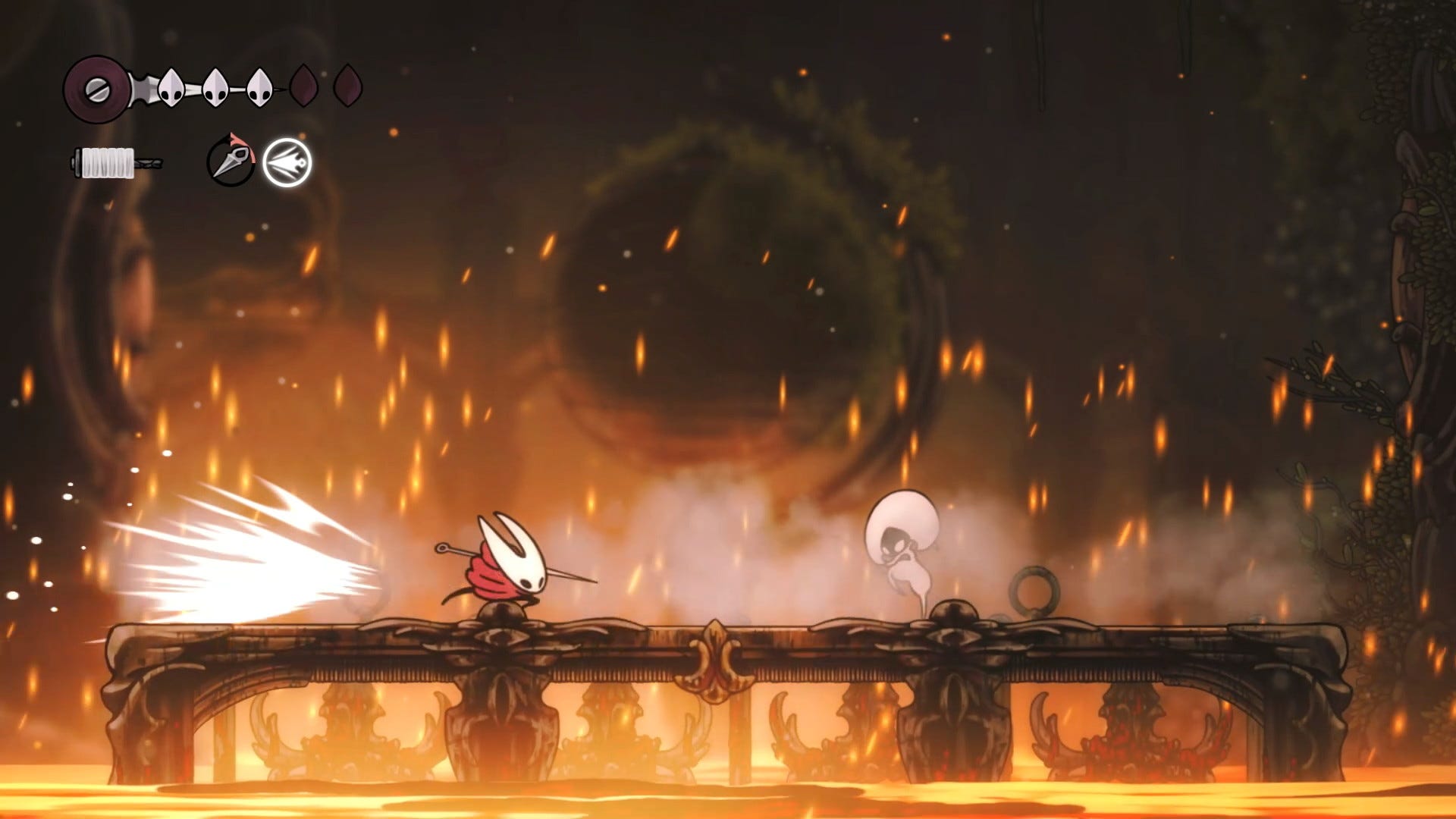
The end result of all of this is that new subgenres appear every few years, it gets harder and harder to make comparisons, and I see a lot of weird stuff when I look at the “boomer shooter” tag on Steam. This whole article, I’ve been wondering why we bother with genres if they can quickly become obsolete or barely contain any meaning in the first place. Just as I type this paragraph, I realize that the tension between our desire to grasp the art and the artist’s goal to create something that can’t simply be contained is perhaps exactly what makes genres meaningful. Genres are how we come to understand where we’ve arrived in the world of the art, and every new game we play incorporates that understanding somewhere. Is it a deliberate callback to a classic, a unique blend of ideas explored in other ways, or something entirely new? As long as we let the container expand the art rather than constrain, genres can help us along as we understand and evolve the medium.
Very nice article!
With boomer shooters in particular, I've always been of two minds about it. On the one hand I've always found the term itself dumb, but for a brief moment in time, it *was* pretty useful to find FPS games with particular design characteristics that I happen to enjoy. In the past, I actually had a lot of trouble finding good first-person shooters on Steam because the search results were dominated by games too modern or too multiplayer-oriented for my taste, and this new tag at least somewhat narrowed things down.
Still, I think that internet discourse renders these terms useless after they start being adopted by people who don't really understand what these design tropes were. You can see the same with a term like 'slop' that took about a week to refer to a specific type of low-effort, shovelware-ish, asset flip product into 'thing I don't like.'
In the end, I don't think hyperspecific subgenres are viable for use in serious discussion, but they can tell you something about the person using them. If someone recommends me Mouse PI or Boltgun because they are boomer shooters or because they are 'like Doom or Quake,' that tells me that these people probably have never played Doom or Quake and I should maybe investigate a little more before I open my wallet. Also just in the interest of overall design literacy it's worth pointing out when a game is not as old-school as it's made out to be, as long as that observation doesn't automatically lead to 'this means it's a worse game.'
Really enjoyed this as a genre / classification nerd. I think you’re right, as everything expands and gets “weirder!” Then it becomes harder to put things in boxes. But as humans, we love to categorise, mental models and heuristics help us make shortcuts to quicker and easier decision. So I guess genres are always gonna be around to help us make decision, even if they do get super complex 🤣