
Story in Multiplayer Games
Where Does Story Fit In When Players Are Focused on Each Other?

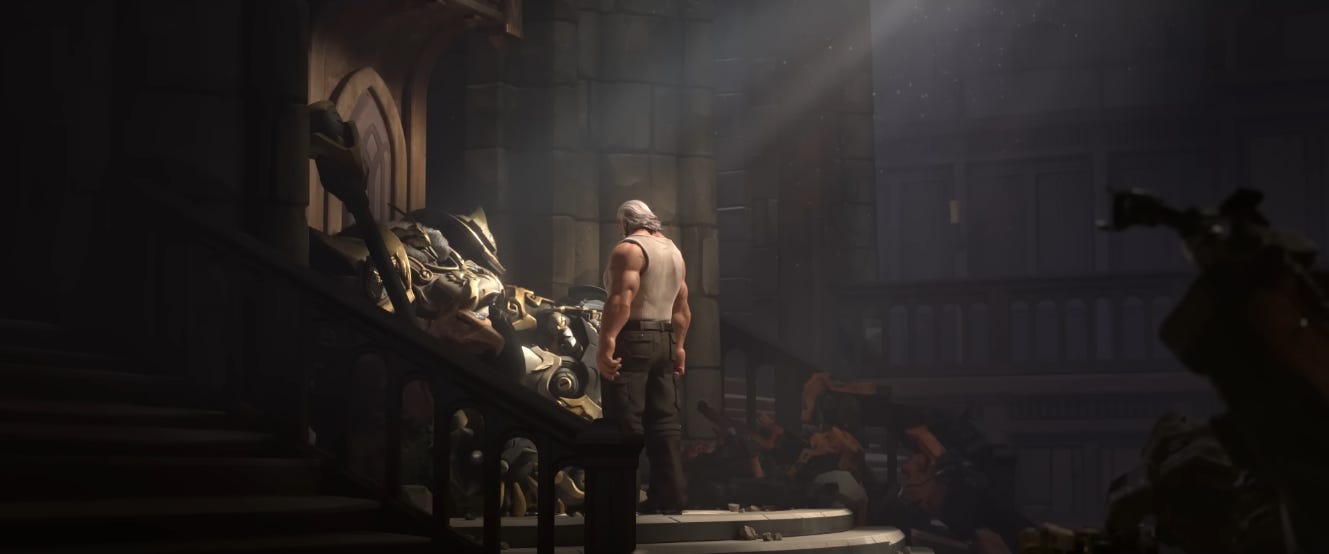
Returning to Overwatch recently has hit me with a surprising rush of nostalgia not just for the game, but for everything surrounding it. Having played it when it first came out ten years ago before going on a long hiatus, listening to my favorite characters interact and playing matches on classic maps felt like coming back home even in the face of everything that’s changed about the game. In particular, I was reminded of the amazing animated shorts Blizzard used to market the game. Marketing an original world and characters to a large multiplayer audience is tough, and Blizzard solved that problem by pouring all their World of Warcraft money into exceptional short films with beautiful animation. These shorts and other supplementary storytelling established Overwatch’s speculative future and touched on all corners of its wide world with playable characters and locations exactly as they appear in the game. Overwatch was always a fun experience, but I chalk up the lion’s share of its success to the creative team. After many of them left due to controversy within Blizzard, fans have noted the game just doesn’t quite feel the same.
This has gotten me thinking about just where story finds its place in the world of multiplayer gaming. Cooperative experiences are often defined by cutscene skipping or excluding story entirely so you don’t have to worry about talking over something. Many players in competitive games play with no regard for wider worldbuilding or characters, choosing what’s strongest or best suited to their playstyle. All the same, nobody plays games that are just polygons interacting in blank voids, no matter how fun they are. Players care about characters and worlds in multiplayer games, but “story” simply doesn’t look the same in that context as it does elsewhere. I’m here to dive into how storytelling impacts the multiplayer experience, and how playing with and against others changes the way we want to interact with story.
Is the Game Telling the Story?
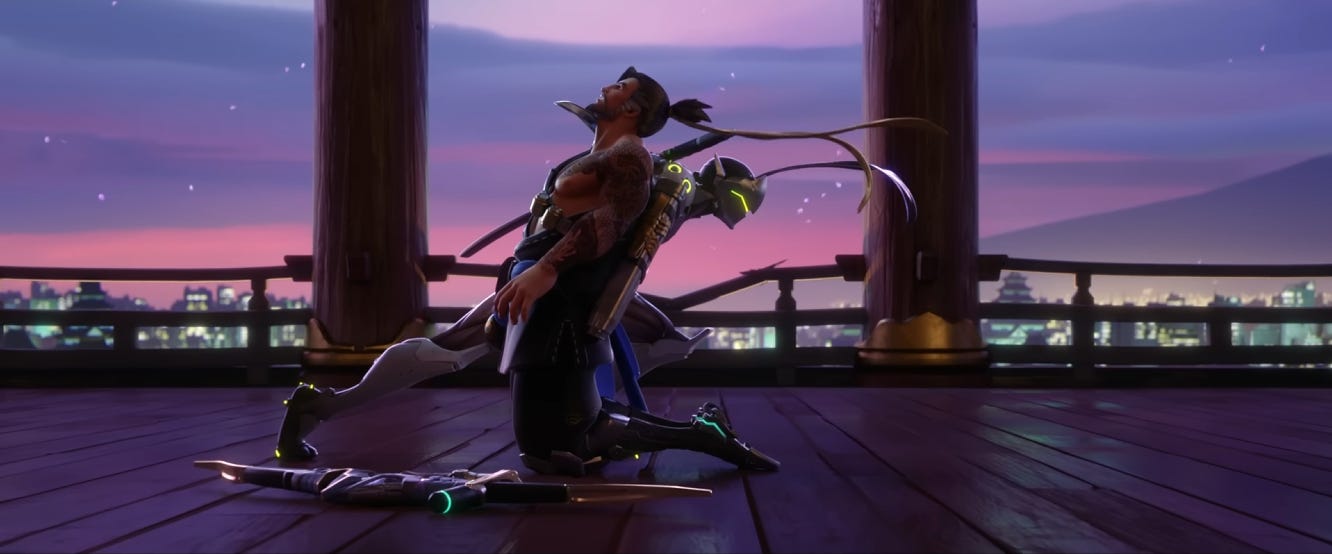
You might have noticed that my first example here with Overwatch concerns storytelling that happens mostly outside of the game itself. When concrete plot events happen in Overwatch’s world, they occur in the animated shorts, webcomics, and more. Characters may talk about what’s happening in the spawn room while you wait for the match to start, or certain details on a map may change in response to a story development, but the development itself happens in supplementary material. This is a very common approach to storytelling in multiplayer games. Even when backstory is contained within the game, as with Guilty Gear -STRIVE-’s movie-style story, reading or watching the plot play out in a separate menu has no tangible connection to the gameplay itself. No matter how many times you win your fight, push a payload, or capture a zone, the story is unaffected by your actions and you are not shown a real narrative development.
The reason for this is quite simple; competitive environments are not conducive to storytelling. These games are at their most fun when your focus is entirely on the match, as the depth of interaction inherent to the competition is more than enough to carry the moment-to-moment experience. Moreover, multiplayer matches are meant to be infinitely repeatable regardless of their outcome. Your victory in a match can’t really lead to the next event the way levels or quests in a single-player game can. While video games are more than capable of interesting and mature storytelling, it makes sense for games so focused on the gameplay to offload their narrative efforts to more traditional narrative mediums like text and film. Both have room to breathe that way, and it has the somewhat meta effect of making the world seem bigger by virtue of how many different ways the audience has to engage with it.
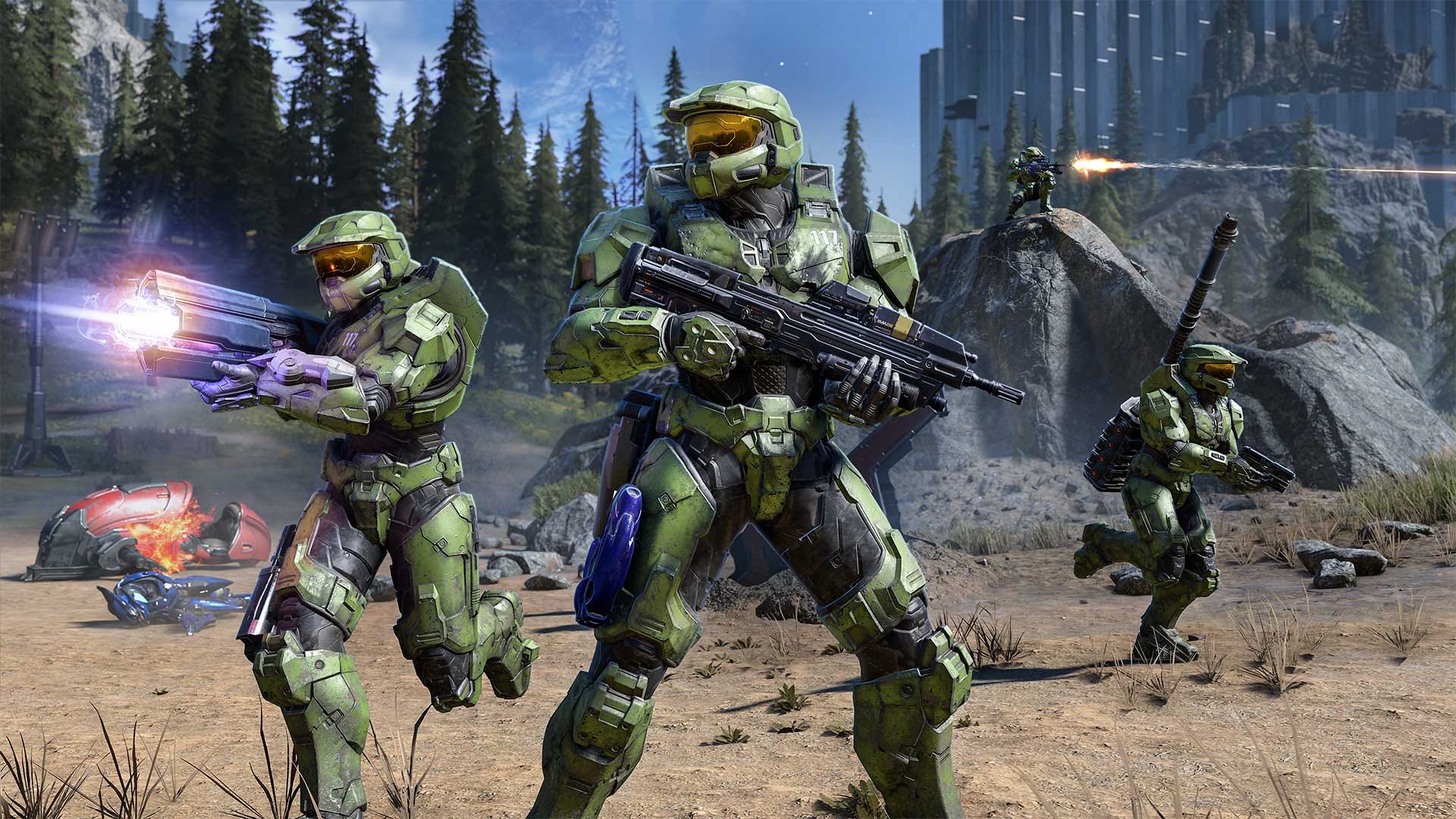
Of course, games used to do the split between story and competition within themselves. The Halo franchise was famous not only for popularizing online deathmatches on console, but for its professional and polished stories that could be played alone or with some friends on the same system. This was the standard going back even before Halo. Though Quake doesn’t exactly tell much of a story, fighting through the unsettling gothic atmosphere as an out-of-place soldier still immerses the player in an interesting world. Before that, fighting games always had their lineup of arcade battles against the computer leading to little plot anecdotes for each character, minimal as that is. However, as the free-to-play, live-service format grew in popularity and fiscal success, most studios couldn’t justify putting effort into a single-player campaign to support the multiplayer world. The multimedia approach is our modern compromise, though some multiplayer games still try to bridge the gap internally. Marvel Rivals tells its story through a mix of written gallery cards and physical comics, but the maps where matches take place are all meant to fit into a certain narrative moment throughout its unfolding story. Bungie’s new Marathon title is attempting to use the looter-shooter genre’s tropes to tie into the original Marathon series’ surprisingly cerebral, postmodern themes. Ideas like death, rebirth, and transcendence remain intact; while I don’t really enjoy looter shooters, the execution in Marathon’s case is interesting.
So, that’s how our competitive games go about telling stories these days. As the emphasis flipped from stories with multiplayer components over to multiplayer formats with supplementary story, the question of just why these games actually bother with the story remains. It’s certainly not as easy to communicate it to your audience as it used to be, and yet it matters all the same. The reason for this is simple:
We Stand By Our People
Recently, Street Fighter III’s poster boy Alex made his way into Street Fighter 6 as Season 3’s third DLC character. Capcom created a ton of hype for him before release, collaborating with J-Pop group JAM Project for his theme and bringing on professional wrestler Kenny Omega to motion-capture some of Alex’s classic wrestling moves. Alex has always had a lot of personality, and I was excited to see Street Fighter 6 take him to the next level. Unfortunately, players like myself found only that his new story was oddly focused around his marriage to Patricia, his adoptive sister and - a new detail in Street Fighter 6 - apparently his second cousin. YIKES. It was so bad that the game was updated with some wide-reaching retcons to Alex’s history that make the situation mostly less weird, but he’s never living it down all the same.
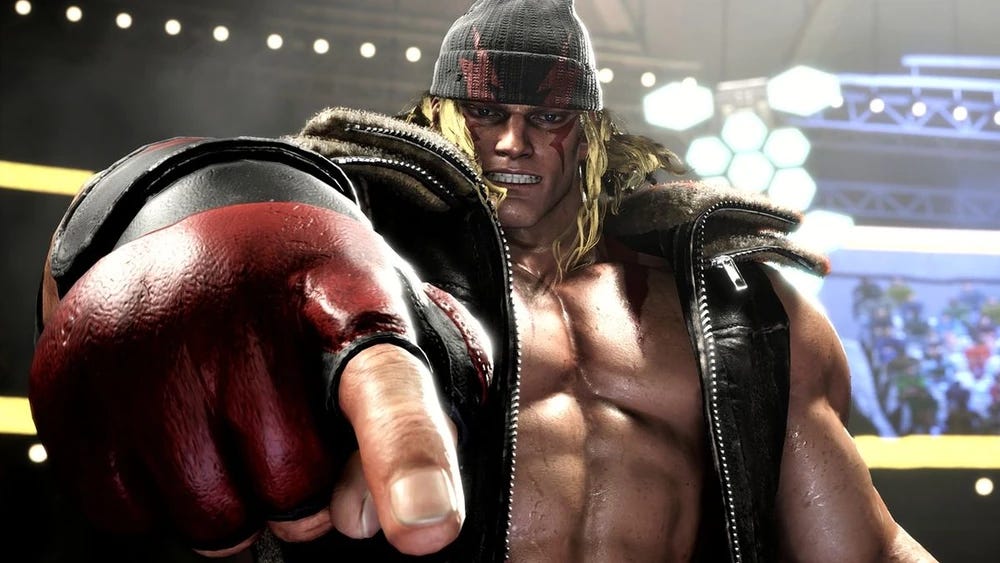

While this drama was fresh, I was listening to fighting game content creator Brian_F’s podcast, Extra Trashy, as he discussed it with pro Street Fighter player iDom. “The whole thing’s a joke to me,” says Brian; “I never realized how many people actually care about Street Fighter writing.” He’s got a point - Street Fighter has never had much of a good story, and the majority of players are just here for the fighting - but I couldn’t agree with him wholeheartedly. Street Fighter players don’t much care about the plot, but they do care about the characters. After all, Street Fighter 6 tricked players into playing the tutorial by turning it into an hours-long RPG where your custom character can hang out with the whole cast and learn their moves.
My point is that people - myself included - like these characters for more than their strength or their playstyle. Ken may fit my playstyle well, but I also play him because I like who he is. I’ve always enjoyed his friendly rivalry with Ryu, acting the foil to Ryu’s self-serious dedication to martial arts as a more laid-back fighter with a life and a family outside of the match. When he got embroiled in a global conspiracy in Street Fighter 6 and went on the run, I was excited to see where the story might take him. This is just as true for Overwatch. Genji is one of the game’s hardest characters, but I like him too much not to put the time in. He’s lived a whole life before the time the game takes place, touching on nearly all corners of Overwatch’s fleshed-out world in his long journey towards inner peace. Plus, he’s a cyborg ninja, and that’s damn cool. I’ve spent many hours as weak characters just because I liked them - Kirby and Richter in Super Smash Bros. Ultimate, Iron Man in Marvel Rivals, and more - and I know I’m not the only one.
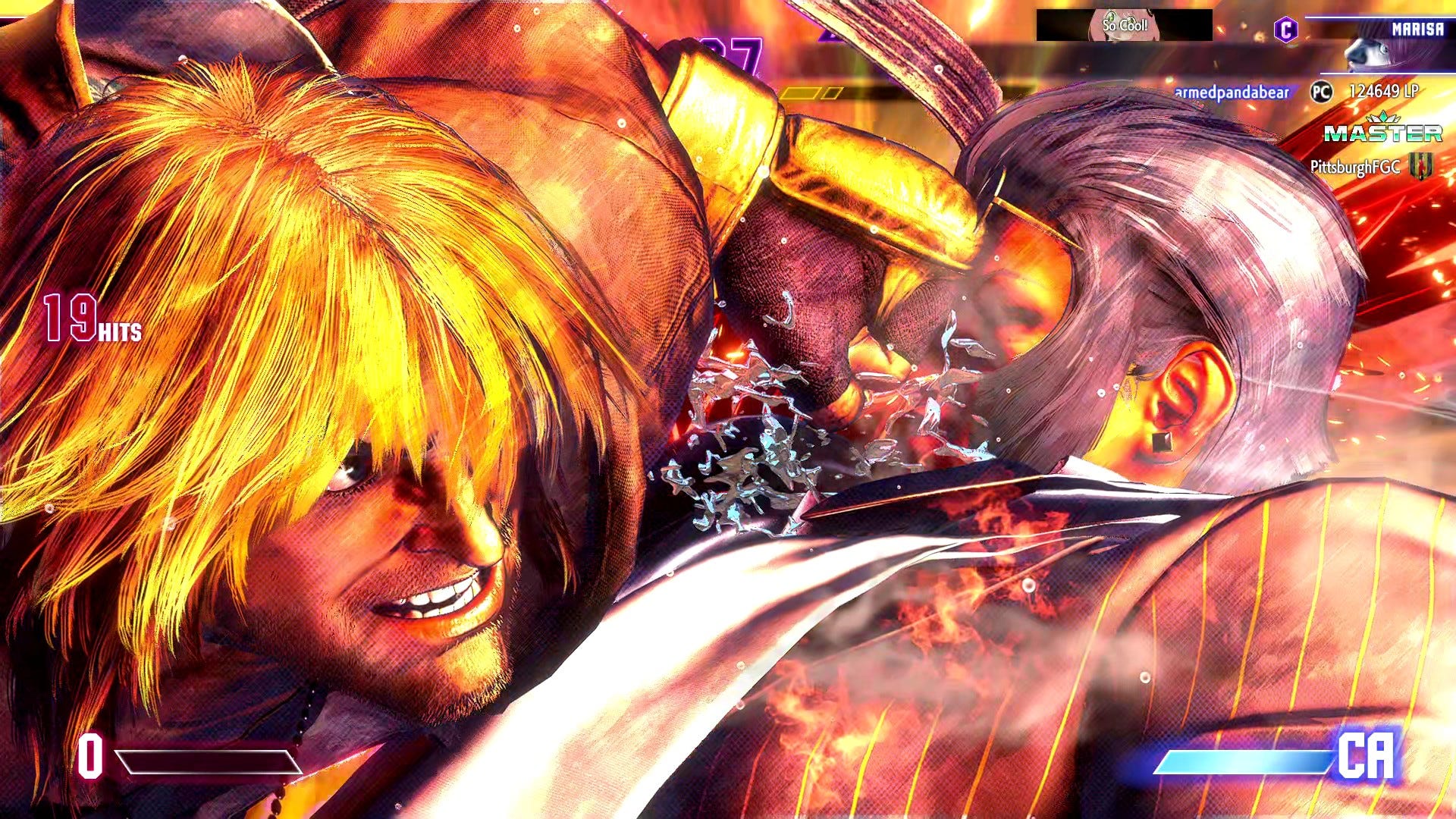
In the best cases, gameplay reinforces personality in perfect synergy. Ken’s style is a little less well-rounded than Ryu’s, but the flashy flaming uppercuts and aggressive offense reflect his confident, free-flowing attitude. That’s why, when Fortnite throws in a skin of Ryu for you to shoot people in, it’s disjointed and meaningless. When Ryu fights with his fists to stay disciplined and appreciate the art of fighting in Street Fighter, it means something beyond the match. Characters are the lens a player experiences these simulated worlds through, and that’s true even when a player’s engagement with the world happens in structured, competitive formats. Who you choose is part of how you express your style in these games, both mechanically and aesthetically. As interesting as the dynamic interplay between players is, our motivation to engage with that system comes when we identify with our characters. Winning feels better when you’re doing it your way, and there’s few better feelings than finding the character you want at your side.
Collaborative Storytelling
The dynamic between story and gameplay changes quite a bit in cooperative multiplayer environments. Many of those aforementioned single-player modes in competitive games have co-op, but it doesn’t connect to the story; most Halo games just drop your buddies in as additional Master Chiefs with no context. Levels are still linear and cutscenes play when they’re supposed to, as your whole voice chat party just kind of sits and watches. Personally, I don’t mind taking breaks to watch the story play out even with my friends, but it’s not the most ideal context within which to take that story seriously. There are certain movies that you just can’t watch with too many people in the same room, as the desire to interact with your friends inevitably overtakes the ability to focus on the screen and really take it all in. Because many games still must put the gameplay on hold to deliver their stories, they can easily be subject to the same problems.
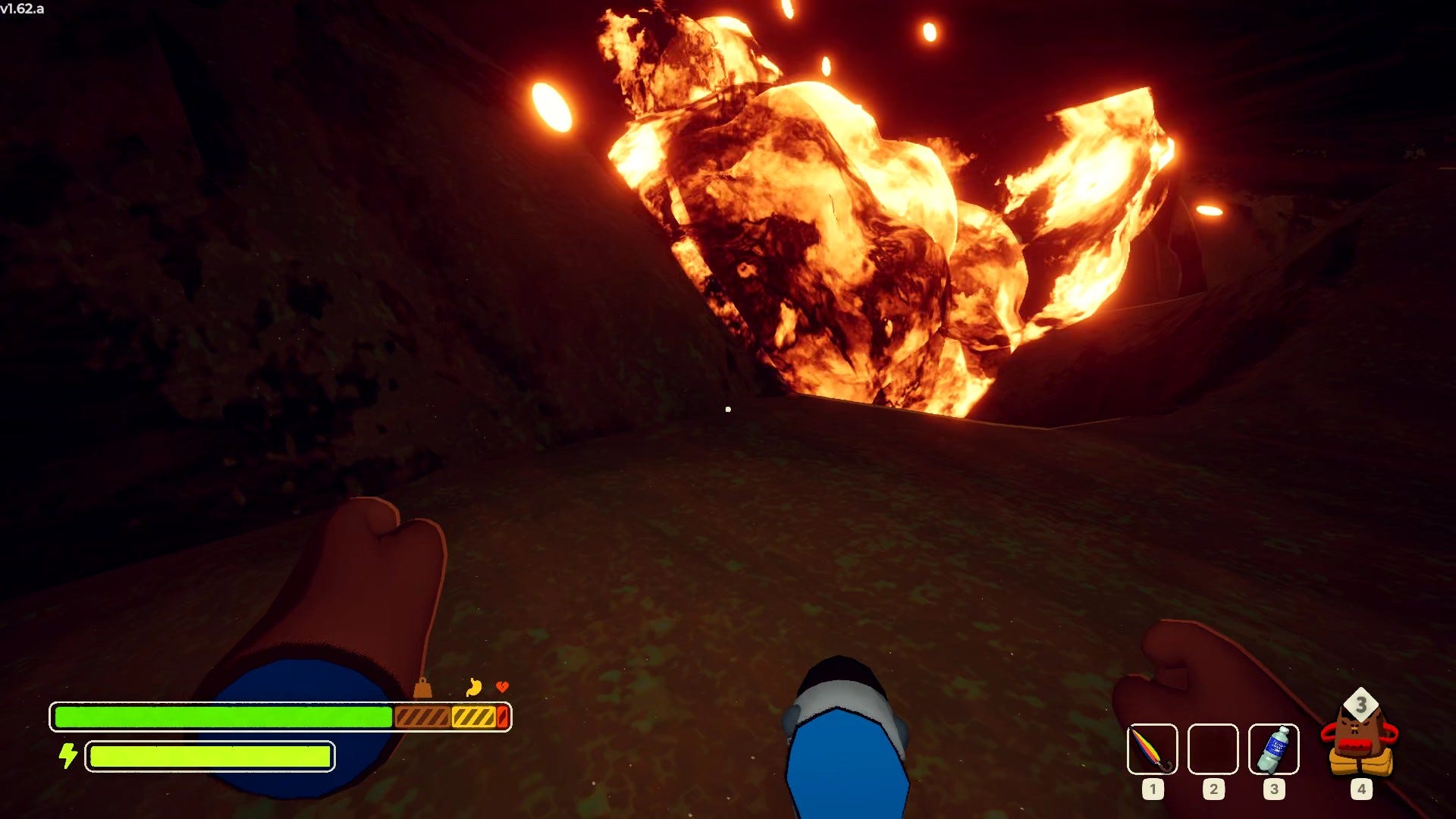
Co-op focused games have learned to direct their storytelling emphasis elsewhere. Instead of focusing on traditional narratives with characters and a chronological sequence of events, these games let players design their own characters and give them a repeatable gameplay framework to enjoy together. Games like Peak, Lethal Company, and Deep Rock Galactic are among the more popular examples of this format. These games all have simple, occasionally even barebones narrative frameworks, but this doesn’t mean story is absent. Rather, the game provides a context for fun moments to emerge with your friends as you play. Though all games possess the emergent stories of personal experience, co-op games place singular focus on letting those moments flourish. The story is not of Peak, but of that time your friend threw dynamite into a pit to cook a scorpion only for your other friend to fall into the pit moments before. Not unlike the collaborative storytelling found in tabletop RPGs like Dungeons and Dragons, there is some real value to allowing people to create their own emergent stories in fictionalized contexts.
I would also be remiss not to mention MMOs. I’ve never really participated in MMOs, unless you count Club Penguin back in the day, but they are easily the most narrative-focused multiplayer games. Games like World of Warcraft, Final Fantasy XIV, and Destiny 2 allow huge populations of players to create their own characters and participate in a world whose events unfold in front of them. Some suspension of narrative is, as always, required - canonically, a given dungeon raid surely only succeeds once instead of the many, many times it is intended to be attempted in the game - but the story still connects much more to the players’ involvement in the world. Participating in a world like this can be quite complex though, and the games themselves are designed around time-consuming RPG mechanics like grinding. It’s no surprise most games can’t commit to fleshing out their world and multiplayer mechanics on this level, as most players only have time to participate in one or none of these games at once.
If there was a short answer to this question, I’d say it’s that multiplayer games have stories because video games are art, through and through. Video games have always represented an unusual confluence of activity and art. Many people consider the aspects of one to disqualify the medium as the other, but the ways multiplayer games have told their stories shows me that games don’t have to pick a side. Even when competition is the focus, the people who make these games can’t resist the opportunity to create interesting worlds and characters. The activity motivates our engagement with the art, and the art enhances our investment in the activity, both in ways we rarely consider consciously. So, as much as story can feel like a secondary priority for these games, I’ll always be interested in what they have to say - and many others will too, even a little more than they know.
I really enjoyed this and it really got me thinking. You’re right about the investment in character story and development, that’s the real reason we play these games. We’d still be invested in different colour or shape stick people because we love to attach emotion and story to characters, especially ones we can embody and control. I do love the old “ultimate fighting tournament” trope to bring everyone together.
Ultimately, I guess we do need a reason why we’re doing these things in a game, but sometimes I suppose that reason can just be “have fun”. 🫡