
Dusk Retrospective
Why Follow When You Can Lead?

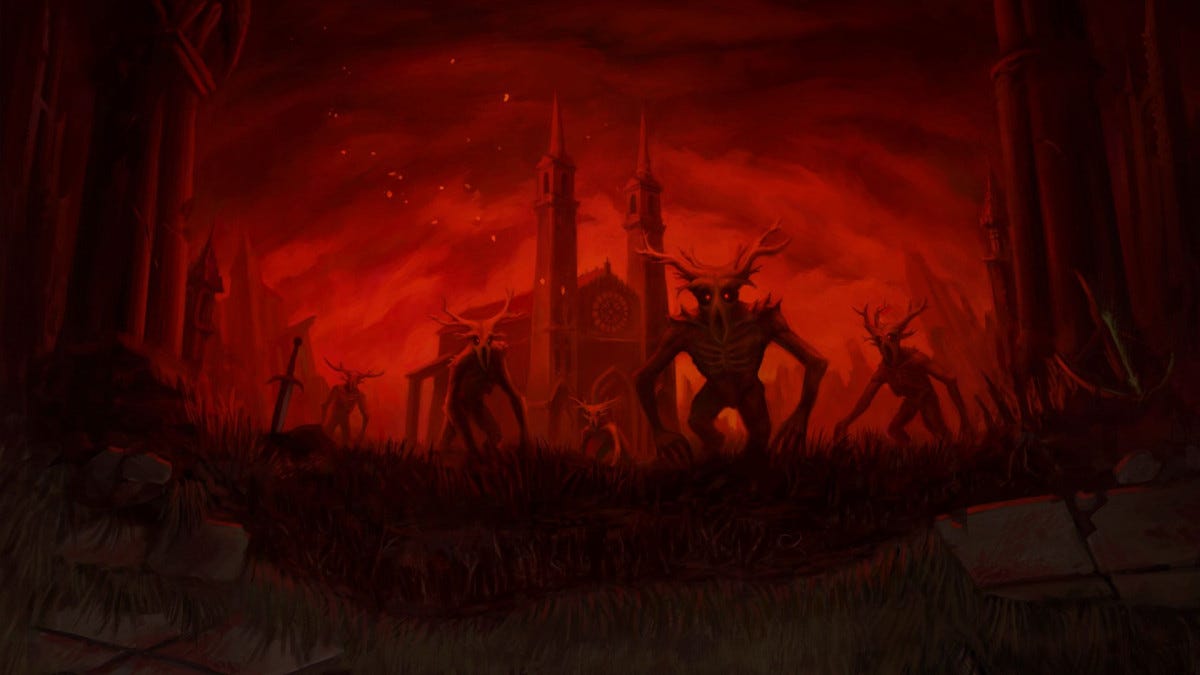
The indie gaming scene has no shortage of “boomer shooter” revivals - games inspired by Doom, Quake, and the like emphasizing high action, quick movement, and quicker reflexes. It’s not hard to understand why; for a while in the 2000s, boomer shooters fell by the wayside as developers and audiences were more interested in narratives like Half-Life or more realistic multiplayer shooters like Call of Duty and Battlefield. Eventually, enough folks with programming knowledge decided they missed the old way of doing things and were going to bring it back themselves, spurred on by the groundbreaking 2016 reboot of Doom. As with any deluge of retro genre throwbacks (cough, Metroidvanias, cough), real success takes more than just imitating what made the classics great. There is perhaps no game that understood this better than David Szymanski’s Dusk, a game which masterfully weaves the genre’s classic look and feel together with wholly unique atmosphere and creative execution.
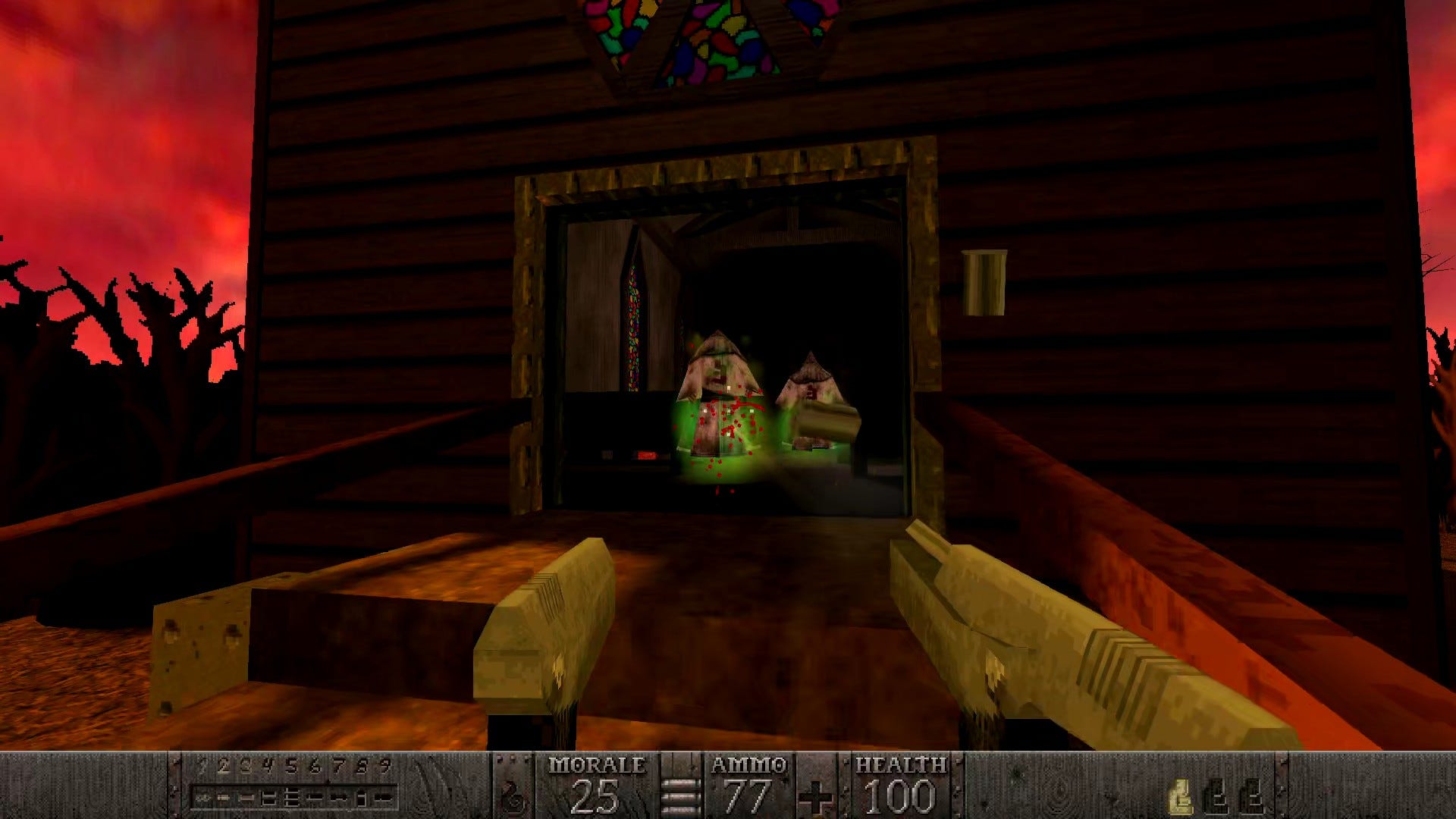
Like the classics, Dusk tosses players right into the action. No backstory, no cutscenes - just you, your sickles, and your wits against an evil cult in rural Pennsylvania. Quake-style strafe jumping and a snappy slide mechanic make movement fast and buttery-smooth. Szymanski’s clever level designs have a clear sense of momentum and direction while also hiding tons of useful secrets to fit every player’s approach. Dusk’s weapons include well-executed staples like the super shotgun and the machine gun and creative additions like the crossbow which can shoot straight through enemies and walls. The graphics match Quake’s early-3D vibe perfectly, leaning into other visual influences from the time like Blood and Redneck Rampage. With an impressive variety of enemies, punchy and satisfying shooting across a well-balanced arsenal, and quick and precise movement, everything about the gameplay meets the mark and then some. Boomer shooter fans will settle into the rhythm effortlessly, and new players can hardly ask for a better introduction to the genre’s classic tempo.
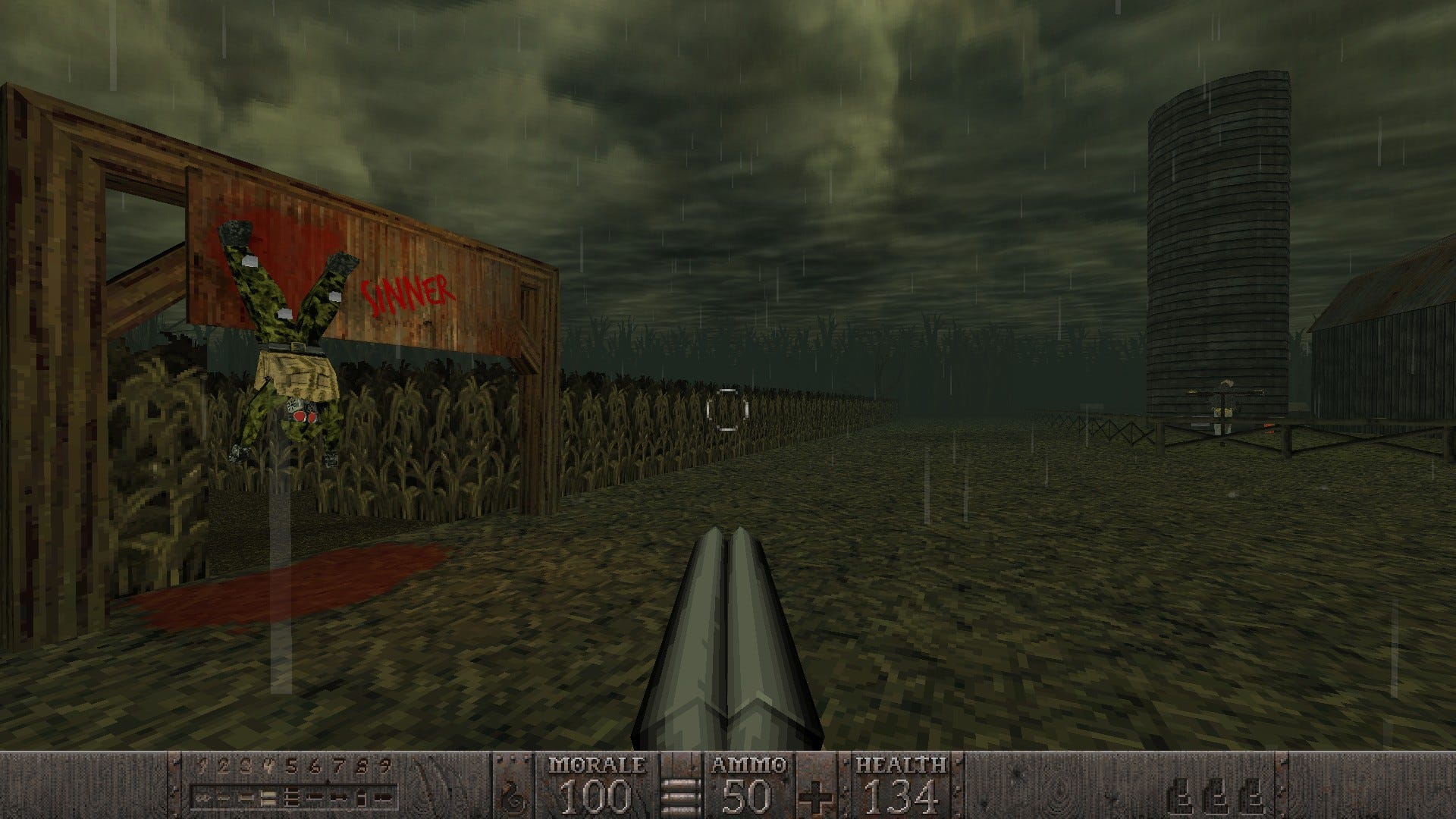
Dusk’s gameplay hits all the right notes, but that’s only a part of what makes this game special. Though boomer shooters have a reputation for paper-thin story, Dusk takes some lessons from the modern age of environmental storytelling to let the levels do the narrative work without distracting from the action. There’s clear continuity from one level to the next, and Szymanski leverages the traditional episodic structure of the classics to further establish thematic progression. The game’s first episode in the rural outskirts pits you against such enemies as hooded cultists, chainsaw-wielding leathernecks, and shotgun-toting scarecrows. Levels resemble real places like farms and lumber yards more than they did in games like Quake, and you can see evidence of how the cult’s influence has affected this place everywhere. There’s some clear slasher inspiration here but, like most boomer shooters, the horror influences don’t manifest in particularly scary moments. Everything seems cut and dry, especially to fans of the genre, but that’s exactly what Dusk wants you to think.
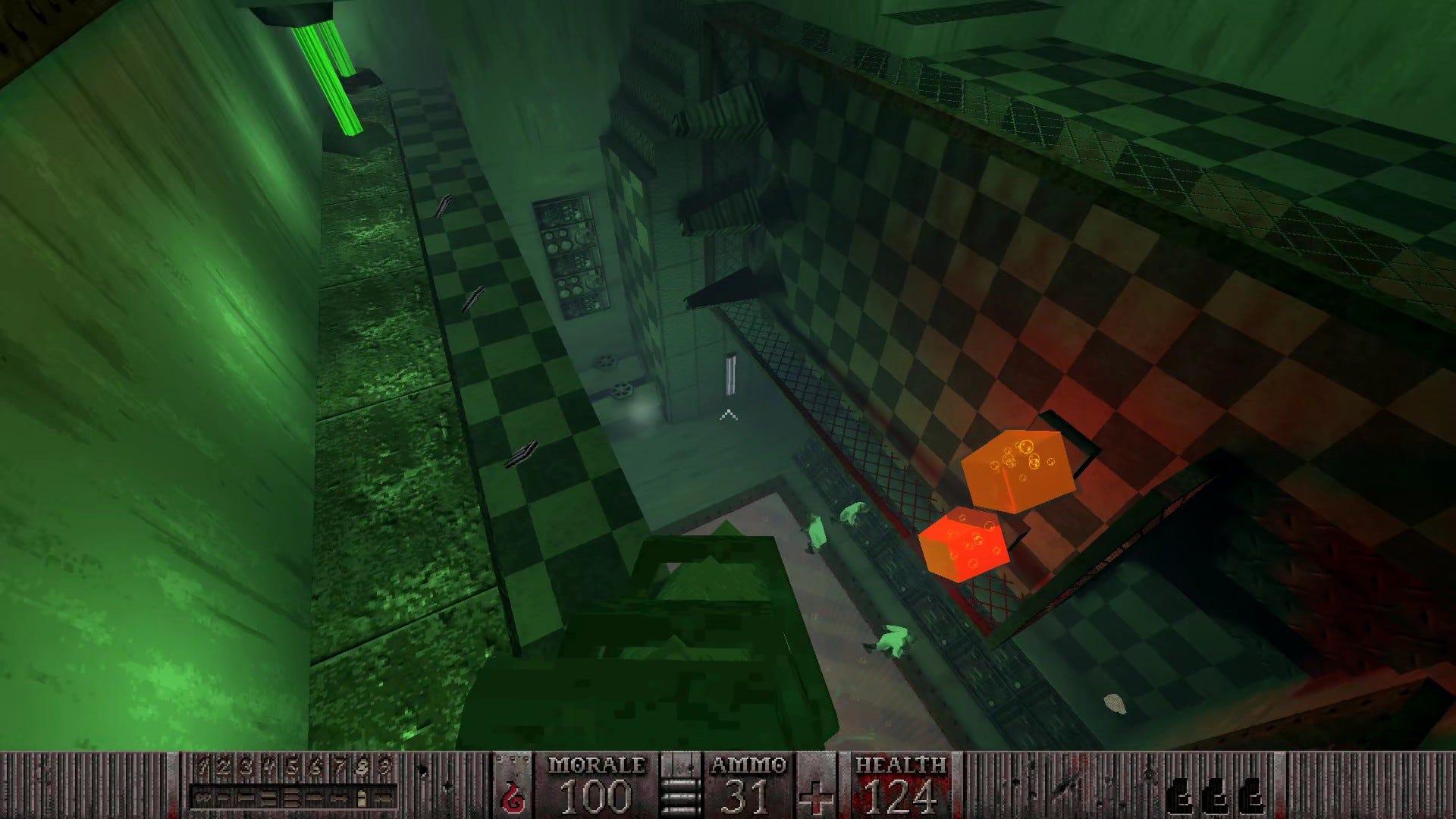
Eventually, you take a trip through a dark, claustrophobic mine where tricks and traps abound. You realize there might be a reason this game, like so many horror games, gives you a flashlight to narrowly light pitch-dark spaces. As you begin your journey into the factory in episode two, you descend to a suspiciously-empty dig site littered with corpses. The music has cut out entirely in favor of foreboding ambience. Descend a little further towards the red key, and your flashlight flickers as you hear heavy, bestial breathing slowly getting closer. The wall, scrawled in blood, reads “Don’t trust your eyes.” After your panicked shots reveal the invisible wendigo and you’ve managed to take it down, you’ll have realized that one of this game’s major innovations in the boomer shooter space is that it is actually trying to be scary sometimes - and it works.
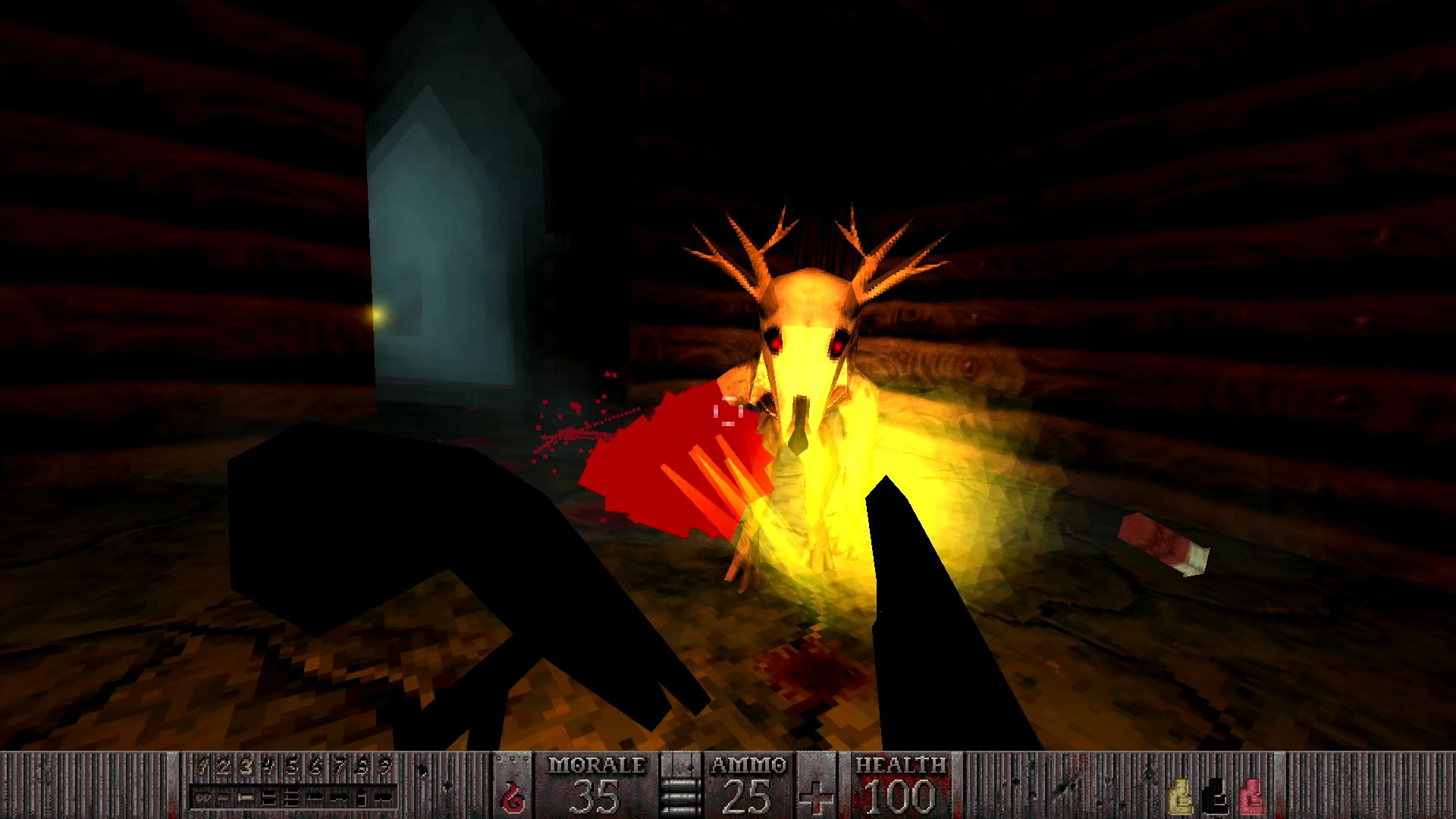
Among the most impressive aspects of Dusk is its ability to switch in moments from ridiculously fast and bombastic action to skin-crawling tension. All of it is attributable to the continuity and pacing I mentioned earlier. The whole first episode gets you comfortable with the boomer shooter essentials before it’s ready to give you a scare. Each episode uses every aspect, from the aesthetics to the enemies to the order you find your weapons, as a chance to distinguish itself from the last. An action-packed level will cap itself off with the reveal of a horrible meat-grinding machine, leading straight into a mission where your flashlight breaks as you navigate the dark insides of the contraption surrounded by an unimaginable amount of emulsified flesh. A laboratory’s rooms flip and turn upon themselves when you backtrack, and a teleporter takes you inside of some horrible ribcage with a droning hiss that masks the sound of two wendigos within. A lot of credit has to go to Andrew Hulshult here, too. Nailing his characteristic action music with most tracks and demonstrating some excellent understanding of ambience with others, Dusk’s soundtrack and sound effect design are among the best of Hulshult’s entire career. Szymanski’s levels find their perfect complement in his work, and it’s hard to imagine Dusk without it.
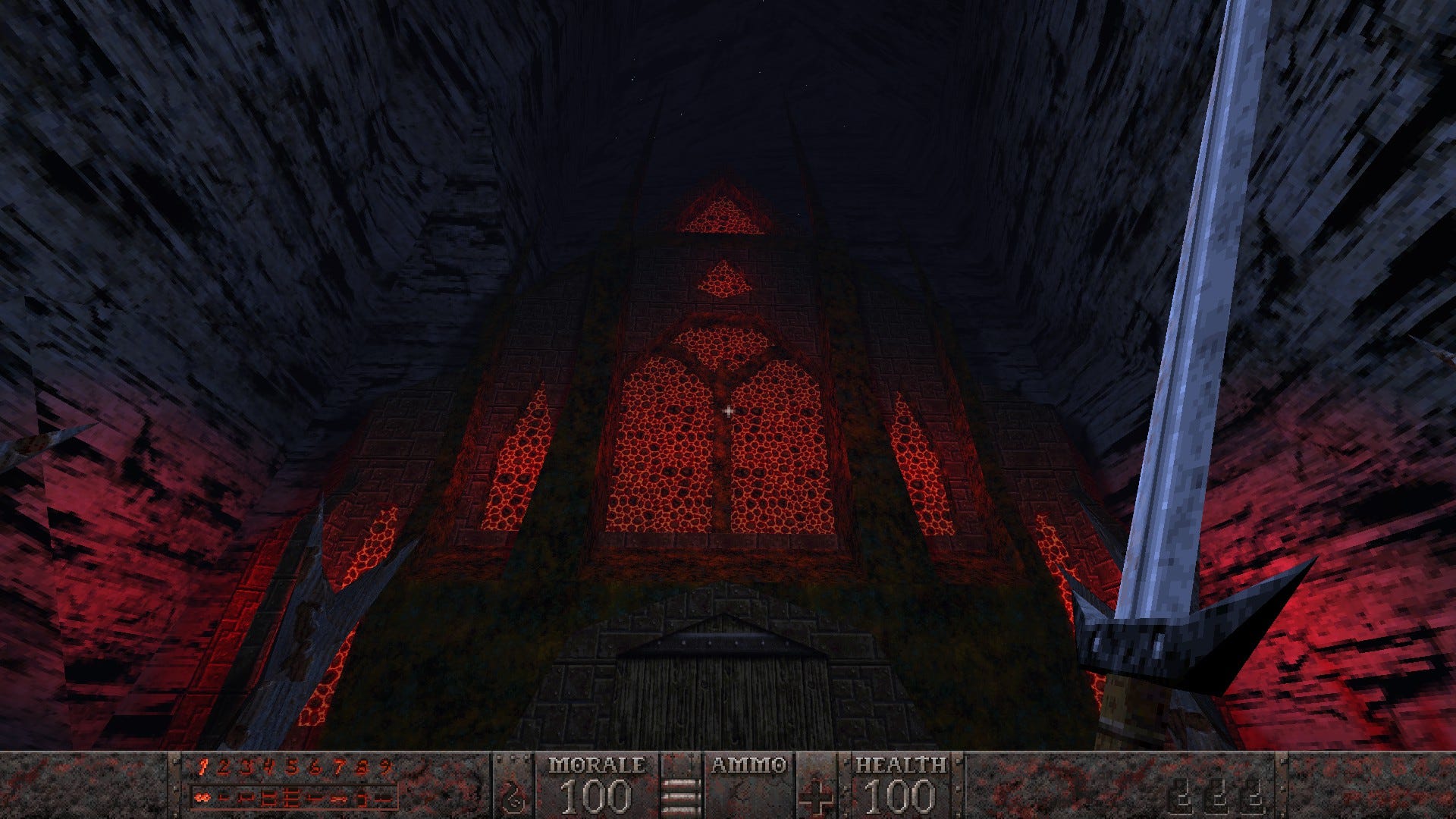
Dusk’s action and its familiar sights are gradually encroached upon by horror moments and mind-bending landscapes as you go further and further. The continuity the game has established so strongly - even including a back door near the start of every level which displays “No turning back now” when interacted with - enhances the disjointed feeling as your quest to uncover the cult’s machinations becomes more and more incomprehensible. It all comes to a head spectacularly in episode three, easily the highlight of the game which I don’t want to spoil much. I’ve already said too much about episode two, honestly, but I didn’t think I could paint a picture of how precise and effective this game’s level design and pacing are without it. It feels like you’re being toyed with in the best way possible. Although I don’t have the stomach for horror - I even chickened out of this game for a little while from one level in episode three - I think Dusk nails its action and its horror in equal parts. After all, the shooting was so good that I toughed out the scares, and it makes the game so much more unique on the whole.
If anything about this review has sounded cool to you, just go ahead and play Dusk. It’s cheap, it runs on anything, and it’s a bona-fide modern classic. It’s right near the top of the pile of indie games that inspire me, these massive accomplishments that show how creativity and steady design can crop up from anyone, anywhere. With a strong command of the fundamentals, David Szymanski created this masterfully-paced, artistic adventure that still feels right in line with the classics that inspired it. Simple as boomer shooters are on the surface, there’s nothing about this game that really came easy. Though it doesn’t make as much noise as some other new-age boomer shooters like Ultrakill, I and many others appreciate the subtle touches that put Dusk at the front of the pack.
As I like Blood and Quake, this sounds quite promising. Thanks for writing about this, I'll take a look.